
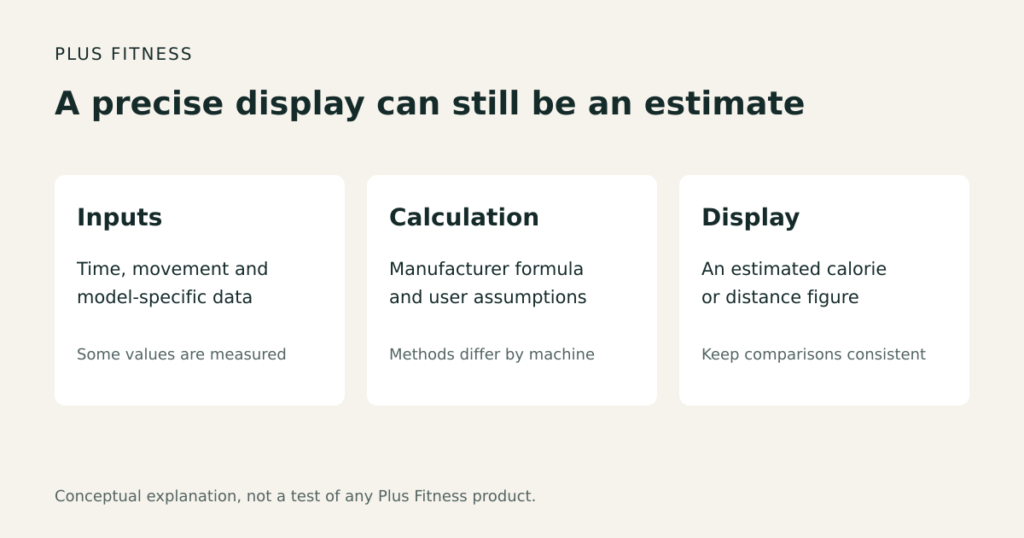
Gym-machine calories are estimates, and distance readings can depend on the machine's measurement method. Use them thoughtfully to record sessions on the same equipment under comparable conditions. Avoid treating a number from one brand as directly interchangeable with a number from another.
The display may show a precise figure such as 237 calories. Precision on a screen does not mean the machine has measured every aspect of your body's energy use.
Understand what is being estimated
A console may use movement, workload, time and user information in its calculation. What it measures directly and what it assumes varies by model. If the machine lets you enter body weight or another profile detail, ask how that information is used.
Concept2's calorie calculator, for example, explains the reference body weight used in its monitor formula and offers an adjustment for the user's weight. That is a clear reminder that an equipment calorie number can include assumptions. It does not prove that every manufacturer's estimate uses the same method.
Calories on a machine should not be treated as a precise meal allowance or a guarantee of weight change. They are one item of session information, with limits that matter when you compare them.
Compare like with like
If you usually exercise on the same bike, a record of duration and a repeatable resistance setting can help describe your sessions. If you move to a different bike, a higher displayed speed or distance does not automatically mean you performed better.
On some equipment, “distance” is a calculated training metric rather than travel across the ground. It can still be useful within that system. The mistake is assuming two different systems translate effort into distance identically.
The same problem appears with strength equipment. Our cable-ratio explanation shows why a weight-stack number can mean different things across machines. Recording the model and setup helps preserve context.
Keep a useful training record
| Record | Why it helps |
|---|---|
| Machine and model | Identifies the measurement system |
| Duration | Provides a clear description of session length |
| Repeatable settings | Makes future sessions easier to compare |
| Relevant measured output | Useful where the model explains its method |
| Your observations | Adds context such as interruptions or unusual behaviour |
Do not turn a record into a contest between unrelated machines. A quieter, more comfortable or better-fitting machine may be more useful to you even if its calorie estimate looks less impressive.
Check units and operating condition
Confirm whether speed or distance is displayed in kilometres or miles. If numbers change unexpectedly, check the user settings and instructions before assuming a mechanical fault or a sudden change in fitness.
Persistent irregular readings should be reported with the model, settings and description of the problem. Add the information to the maintenance log so a technician can see when the issue began. Do not open the console or alter sensors unless the manual authorises the task and you are competent to perform it.
Buy the metrics you need
If you only want a reliable timer and an easy way to repeat a session, a complicated connected console may add little. If data export or a particular platform matters, verify compatibility and any subscription requirements before purchase.
The rowing-machine guide includes console considerations alongside fit and maintenance. When comparing Plus Fitness cardio equipment, ask the team which figures the shortlisted machine measures, calculates or requires you to enter. A clearly explained number is more valuable than an impressive-looking one with an unknown method.
Pingback: Mini Stepper Buying Guide Fit Space and Care