
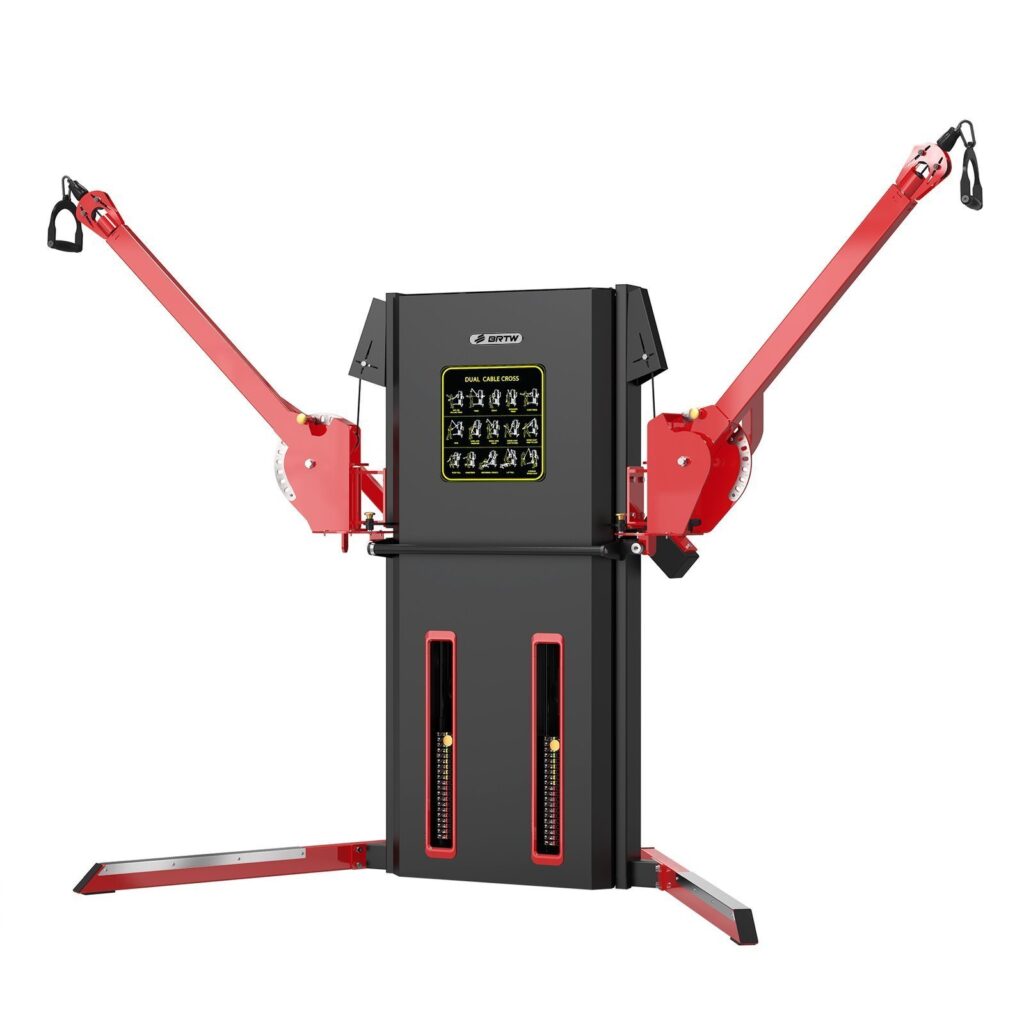
A functional trainer is worth buying when its cable positions, available resistance and working area support the movements you intend to perform. Count the useful movements it enables in your room, not the number of exercises printed in the brochure.
The machine can be remarkably versatile. It can also consume most of a small room while leaving too little space to move away from the pulleys. The difference is usually visible during planning, before a quote becomes an order.
Start with a short movement list
List the exercises or movement patterns you want the equipment to support. If a coach is helping you, have them identify the required pulley heights, attachments and working positions. This gives the supplier something concrete to demonstrate.
For example, a standing cable movement and a seated pulling movement may require different support, clearance and cable travel. A machine that allows the handle to reach a starting position does not necessarily provide enough travel to complete the movement as intended.
Treat the demonstration as a practical fit test. Check adjustment controls, attachment changes and access around the machine, following the supplier's instructions.
Understand the resistance you are buying
The total weight printed in a product description may refer to both stacks together. It may also describe stack mass rather than resistance at one handle. Ask for the exact interpretation.
REP's cable-ratio guide explains why stack weight and handle resistance can differ. Our worked pulley-ratio article develops that distinction for comparing a shortlist. Do not rank two machines by their largest kilogram figure until their configurations are understood.
Also examine the smallest useful increment. A high maximum is helpful only if the lower settings and steps between them suit the movements you plan to perform.
Draw the working space
Place the frame on a measured room sketch, then show where the user stands or sits. Add the space needed to move a bench, reach the weight stacks, store attachments and service the machine.
A corner placement may work well for one exercise and restrict another. A wall-mounted design may reduce the frame footprint while introducing specific structural and fixing requirements. Installation must follow the exact product documentation and an appropriate assessment of the supporting structure.
Use the gym setup brief to collect the measurements and responsibilities. A layout should show usable training space, not simply prove that the machine fits through the door.
Check whether two users can really train together
Two cable outlets do not automatically mean two independent training stations. They may share a stack, a working area or a component whose movement affects the other outlet. Even independent stacks can have overlapping user positions.
The multi-station capacity article explains how to map those conflicts. For a shared gym, ask the supplier to demonstrate the combinations that are intended for simultaneous use. Do not infer them from the number of handles visible in a photograph.
Make the attachment list intentional
Start with the handles needed for your planned movements. Confirm connector compatibility, intended loads and storage. A large accessory bundle can look valuable while including several pieces you rarely use.
Our cable-attachment guide helps compare grip shapes and practical handling. If a bench or support is required for an exercise, include it in the layout and the budget rather than treating it as a later detail.
Plan the ownership routine
Ask for the inspection and maintenance instructions, including the checks permitted for the owner. Cables, pulleys, adjustment locks and connectors are functional components, not decorations. A damaged cable or unreliable lock should lead to withdrawal from use and an appropriate service assessment.
Confirm how replacement cables and other model-specific parts are identified. Keep the model information, manual and installation records together. For a business, assign responsibility for reporting faults so one person's observation is not lost at the end of a shift.
Compare a complete proposal
Request the exact machine, included attachments, assembly scope, anchoring requirements where applicable, delivery access and written support terms. Ask the supplier to identify any missing equipment needed for your movement list.
Plus Fitness lists a functional trainer. Send your room sketch and intended exercises when asking about suitability. A good purchase is one whose useful range you can explain in your own room, with the load, space and support questions answered before delivery.
Pingback: Cable Machine Attachments What to Buy First