
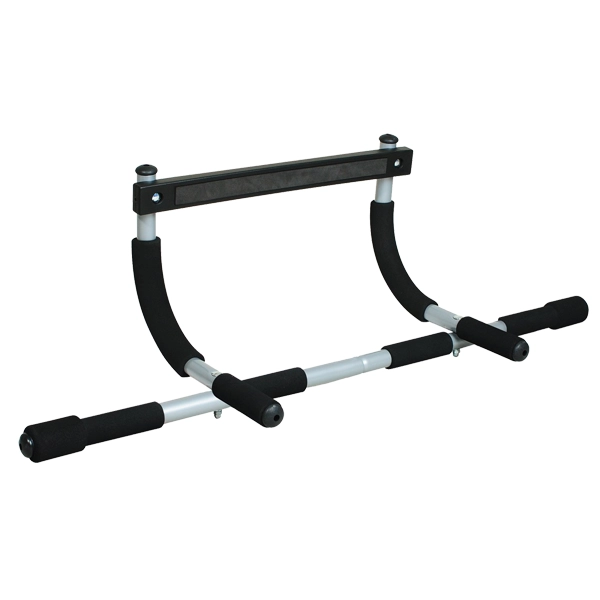
A doorway pull-up bar is suitable only when both the product and the supporting doorway meet the installation requirements. The bar's stated capacity does not certify the door frame, trim, wall or fixings. Identify the mounting system first, then assess the actual structure.
This is the part of the purchase that a product photograph cannot settle. Two doorways with similar widths can be built very differently.
Distinguish the mounting systems
Some products use a leverage arrangement around the doorway. Others use telescoping or fixed systems, and some bars are intended for wall mounting rather than doorways. Each has different requirements and limitations.
Do not treat “no drilling” as a guarantee of suitability for every frame. Likewise, do not assume that the fixings supplied with a wall-mounted product are appropriate for every wall material. Follow the exact instructions and obtain a competent assessment where the structure or fixing method is uncertain.
Measure more than the opening width
Record the dimensions required by the manufacturer. These may include depth, trim arrangement, supporting surfaces and clearance above or beside the opening. Check whether the door can still operate as intended and whether the installed equipment obstructs a route.
Photographs can help a supplier understand the arrangement, but they may not reveal concealed construction or structural condition. Do not approve a questionable frame because the visible trim looks substantial.
For a rented home, establish the permitted alterations and agree the installation method with the owner before proceeding. That agreement does not replace a technical assessment of the support.
Confirm the permitted activity
A capacity figure may apply only to specified use. Do not assume that swinging movements, added external load or suspended accessories are allowed. A resistance band or other attachment can change the direction of force on the support.
The band-rating article explains why an elastic setup must be assessed as a complete system. A compatible band alone cannot make an unsuitable bar or doorway appropriate.
The principle of checking equipment after installation is discussed in HSE's inspection guidance. It is useful operational guidance here, not a statement of Nigerian building law. Use the manufacturer's specific checks and appropriate local professional advice for the actual installation.
Plan inspection and removal
Establish what needs checking before use and how any removable bar should be stored. If a component loosens, a frame is damaged or the product moves unexpectedly, stop using it and seek assessment. Do not compensate with improvised packing, stronger adhesive or extra tightening beyond the instructions.
Keep the model details, manual and installation record with the purchase information. The warranty checklist helps preserve those documents without assuming every installation issue is covered.
Consider a different arrangement if the doorway is unsuitable
A freestanding rack or other approved system may be a better fit for the available building, although it introduces its own space, installation and cost requirements. Read the existing rack and power-cage guide before treating that alternative as automatically straightforward.
Plus Fitness lists an upper-body workout bar. Ask which mounting arrangement the exact supplied model uses and send the required doorway measurements. The decision should be based on a verified fit between product and structure, not on whether the bar can be made to stay in place for a quick trial.
Leave a Reply