
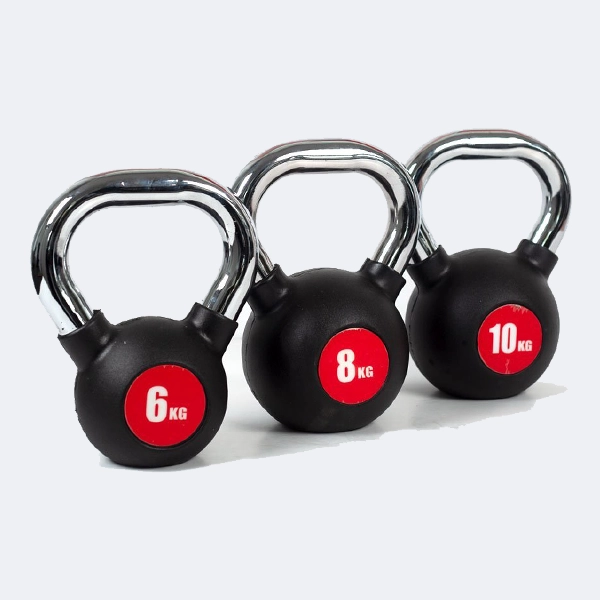
Choose a kettlebell by the movements you intend to learn, the load you can control appropriately and how the handle fits your hands. A recommended weight based only on being a man, woman or beginner leaves out too much information. The same person may need different loads for different movements.
The handle is where the purchase becomes personal. Two bells with the same number on the base can feel noticeably different before you perform a single repetition.
Pick the movement before the weight
Tell a qualified coach what you plan to do with the bell and use an appropriate supervised trial to establish a starting load. A carry, press and swing create different demands. Being able to lift a bell off the floor does not establish that it is suitable for every movement.
If buying for a class, resist the temptation to order a single weight for everyone. Determine the useful range with the instructor and match quantities to the people expected to train together.
For a home buyer, one suitable bell can be a sensible start. A future progression plan is helpful, but it should not turn the first purchase into a collection of weights you cannot yet use comfortably.
Examine the handle closely
Check the opening, handle diameter, surface and any seams or rough areas. If two-handed movements are intended, there must be appropriate room for both hands. If a movement places the bell against the forearm, assess that position under guidance as well.
REP's kettlebell guidance highlights handle comfort and finish as selection factors. Those considerations are more useful than assuming a glossy or textured finish is always best. Try the actual product where possible.
Check that the base is suitable for the intended use and that the marked weight and units are clear. A compact photograph can disguise differences in overall size and shape.
Decide whether one bell or a set makes sense
| Buying situation | Sensible starting question |
|---|---|
| Learning a few movements | Which load is appropriate for those movements with guidance? |
| Sharing at home | Do the users need different loads or handle sizes? |
| Equipping a class | How many people need each load simultaneously? |
| Expanding an existing set | Which missing weight limits the current programme? |
The dumbbell-increment article explains why the size of a weight increase matters. The same percentage-change idea is useful when thinking about a kettlebell range, although the correct progression still depends on the person and movement.
Plan storage before the bell arrives
Keep bells in a stable, appropriate place where they will not obstruct a route or become a falling hazard. A suitable rack must accommodate their actual dimensions and load. The storage-planning guide explains why kilograms alone do not determine rack capacity.
Clean and inspect the bell according to its material and manufacturer's guidance. Stop using equipment with damage that affects safe handling and ask the supplier for an assessment rather than covering a defect with tape.
Make a focused enquiry
Plus Fitness lists kettlebells. Ask about the available weights, units, handle dimensions and current product finish. If you are deciding between adjustable resistance tools, the existing dumbbell comparison can help explain the storage trade-offs.
The best first bell is one you can use appropriately for a clear purpose. Its usefulness comes from a good match between the person, the movement and the equipment, not from buying the heaviest option you can afford.
Pingback: Dumbbell Weight Increments Build a Useful Set