
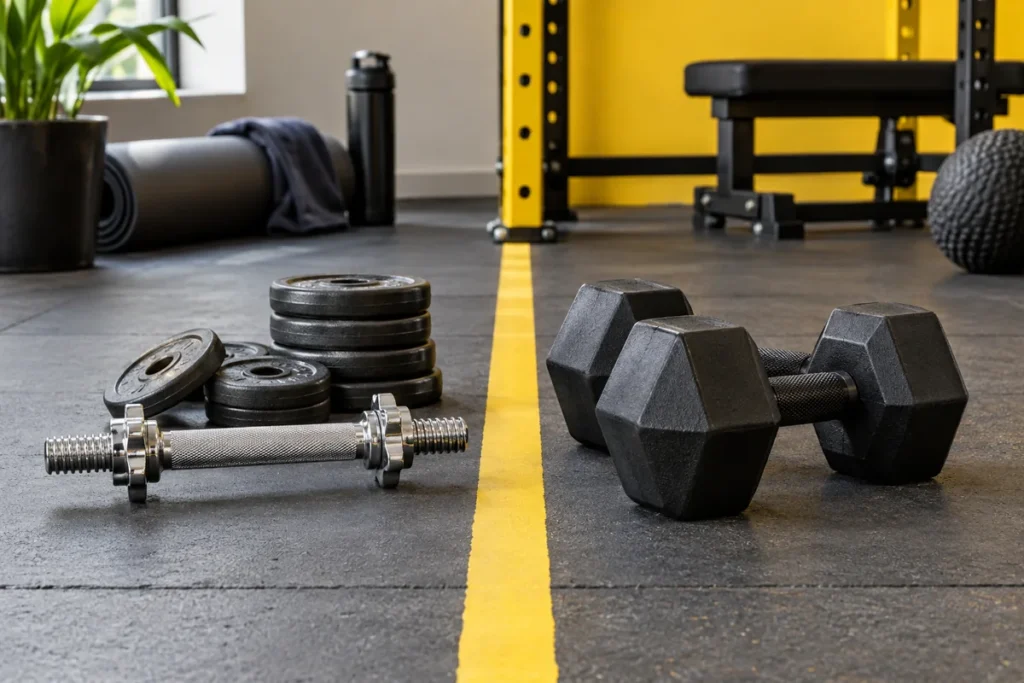
Featured image: AI-generated comparison illustration; identifiable products are shown separately in catalogue photographs.
Choose fixed dumbbells if quick changes, straightforward handling and shared use matter most. Consider adjustable dumbbells if you need several resistance options in a smaller storage area and are comfortable with the adjustment process. The better purchase depends on the exercises, available space, weight increments and the exact design—not simply the maximum weight advertised.
For a home buyer, the most useful question is: “Can I move between the weights I actually need, store them properly and obtain support for this particular set?” This guide compares the options without assuming that the most compact or expensive one suits everyone.
Understand the three common arrangements
Fixed dumbbells have a set weight. You change resistance by selecting another dumbbell. A pair is easy to identify when markings are clear, but a useful range needs storage for several pairs.
Plate-loaded adjustable dumbbells use removable plates on handles, secured by the system’s collars or locking arrangement. Changing weight takes several steps, and the plates and collars need somewhere to go while you work. Compatibility and the permitted loading arrangement must be checked for the exact handles.
Selectorised adjustable dumbbells use a mechanism to choose a weight, usually while the dumbbell sits in a compatible cradle. Their convenience depends on the design, available increments and correct engagement. Do not assume every selectorised product works the same way or has interchangeable parts.
| Option | Useful when | Main point to check |
|---|---|---|
| Fixed dumbbells | You want rapid changes or several people may train together | Storage, complete pairs and a suitable spread of weights |
| Plate-loaded adjustable | You accept a slower change process and want a modular set | Handle, plate and collar compatibility; usable load per handle |
| Selectorised adjustable | Compact storage and convenient changes are priorities | Mechanism, increments, cradle use, restrictions and parts support |
Compare weight per hand, not just the set total
A “20 kg set” does not necessarily mean two dumbbells of 20 kg each. It may describe the combined weight of plates, handles and other included components. Ask for the complete contents and the maximum permitted assembled weight of each dumbbell.
The same distinction matters with fixed weights. A listed price or quantity may refer to one dumbbell or a pair. Confirm both before comparing costs.
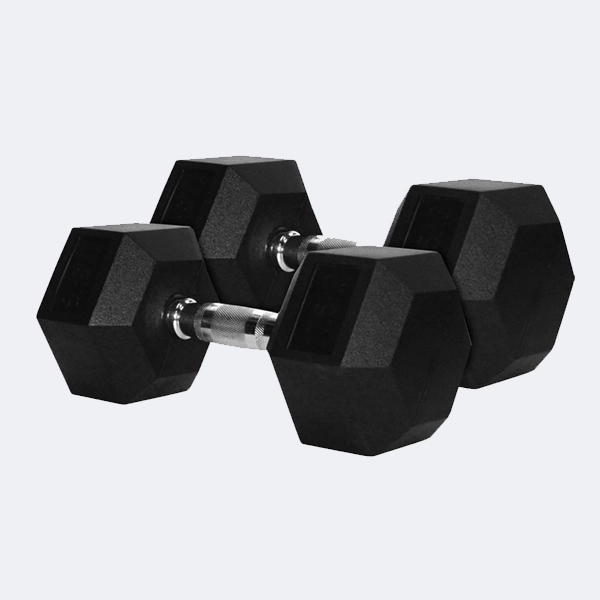
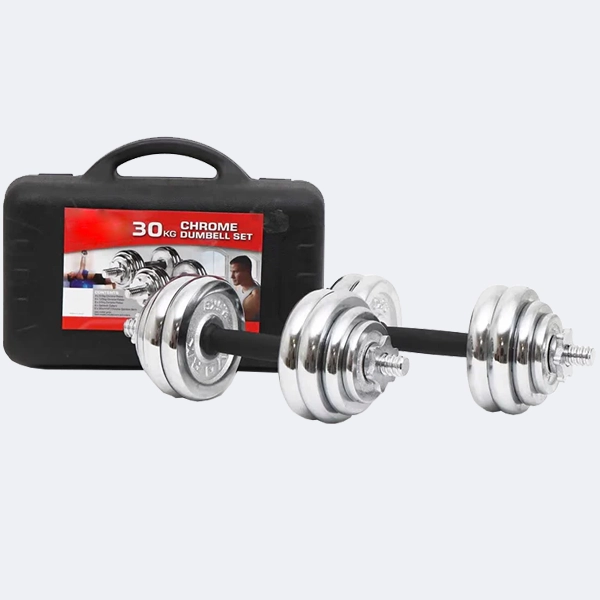
The Chrome Dumbbell Set is an example of a plate-loaded set in the Plus Fitness catalogue. The Hexagon Dumbbells provide a fixed-weight comparison. Use the current product options as a starting point, then ask for the exact contents, available weights and whether the quoted quantity is single or paired.
Do not assume that a photograph of a complete range means every weight is included in one purchase. Ask for the invoice description to match what you intend to receive.
Look at increments as carefully as the maximum
The jump between available weights affects how useful a set is across different exercises. A maximum that suits one movement may be irrelevant if the lighter settings are unsuitable for another. List the weights you currently use and the next steps you are likely to need, with advice from a qualified coach if appropriate.
For a plate-loaded set, calculate which balanced combinations the supplied plates permit on each handle. Do not assume that every number between the minimum and maximum is possible. For a selectorised set, ask for the complete adjustment sequence, not just the endpoints.
This is especially useful when two people share equipment. If both need the same pair at once, a single adjustable pair cannot provide two simultaneous stations. Storage efficiency and training capacity are separate questions.
Try the handling and shape
Where a demonstration is available, assess the grip, overall length and how the dumbbell sits in the movements you intend to perform. A long adjustable handle can feel different from a compact fixed dumbbell of the same mass. The shape and finish of the ends also affect handling and storage.
Check how adjustments are made without rushing. Can you see whether the locking arrangement is properly engaged? Are markings readable? Does the manual describe checks before use and restrictions on certain movements or handling? Ask the seller to demonstrate the correct process for the exact model.
Do not invent your own test by dropping a dumbbell or loading it beyond the stated limit. A product marketed for strength training is not automatically intended to be dropped, and adjustment mechanisms can have specific handling restrictions.
Count the whole storage area
Adjustable dumbbells can reduce the number of separate weights, but they still require a stable storage position and room to make changes. Plate-loaded sets also need storage for spare plates and collars. Selectorised systems may require their original cradles to adjust correctly.
Fixed dumbbells need a rack or another suitable storage arrangement for the selected range. Check the storage unit’s compatibility and capacity rather than assuming any shelf will do. Keep the route to the weights and the surrounding exercise space clear.
Measure the room with equipment in use, not only packed away. A folding bench, adjustable pair and storage stand may each be compact separately but compete for the same floor area during a session. The small-apartment gym guide helps put that decision in context.
Ask about support before buying a mechanism
For any adjustable design, find out how replacement collars, handles, cradles or selector components are obtained. Ask whether the supplier can identify the exact model and supply its manual. Parts that look similar may not be compatible.
If buying used, check the model and serial details against the manufacturer’s safety notices and relevant recall information. The US Consumer Product Safety Commission recall database can provide additional information for products sold in that market, but absence from one database is not proof that a product is safe or fully checked.
Do not buy an incomplete locking system on the assumption that a generic part will make it usable. Ask the manufacturer or authorised supplier to confirm the correct replacement. If a seller cannot demonstrate that the weights engage and remain secured according to the manual, resolve that before purchase.
Compare the purchase you will actually need
Compare a useful fixed-weight range against an adjustable set that covers the same intended weights. Include storage, additional plates or missing pairs, delivery and any necessary accessories. Comparing one fixed pair with a complete adjustable range does not answer the same buying question.
Avoid predicting savings from a future range you may never need. A small number of well-chosen fixed pairs may suit one buyer; another may use the flexibility of an adjustable set from the first week. Be clear about the activities and people the purchase must serve.
For an existing collection, check whether an additional pair or compatible plates would solve the problem before replacing everything. Mixed brands are not automatically incompatible, but matching appearance is not proof of compatibility either.
Three example decisions
One person, limited storage, unhurried sessions: a suitable adjustable system may be practical if the available increments and adjustment process fit the routine. Include a stable place for changing and storing the weights. If the dumbbells are part of a wider strength area, check the bench, rack and barbell-and-plate compatibility separately. Shared facilities may also need to compare pin-loaded and plate-loaded machines. Apply the used-equipment inspection checklist before choosing a second-hand set.
Two people sharing a room: fixed pairs or more than one adjustable pair may be needed to avoid waiting. The right answer depends on whether they train together and use similar weights.
A facility with frequent users: prioritise documented suitability for that use, easy identification, robust storage and a clear inspection process. Do not assume a home adjustable set is covered for shared or commercial use.
These are decision examples, not prescriptions for how much anyone should lift.
Before you order
Confirm the weight per dumbbell, the adjustment increments, the supplied parts, the permitted use and the storage arrangement. Ask for the manual, warranty conditions and support route. Keep the quotation precise enough that a person receiving the delivery can count and identify every item.
If you are building a broader strength area, the existing beginner’s strength-training equipment guide provides context. To compare current options, contact Plus Fitness with your available space, intended users and the weights or activities you need the equipment to support.
Prepared with AI assistance. Sources and product links checked on 18 September 2026.
Pingback: Barbell, Plate and Collar Compatibility | Plus Fitness