
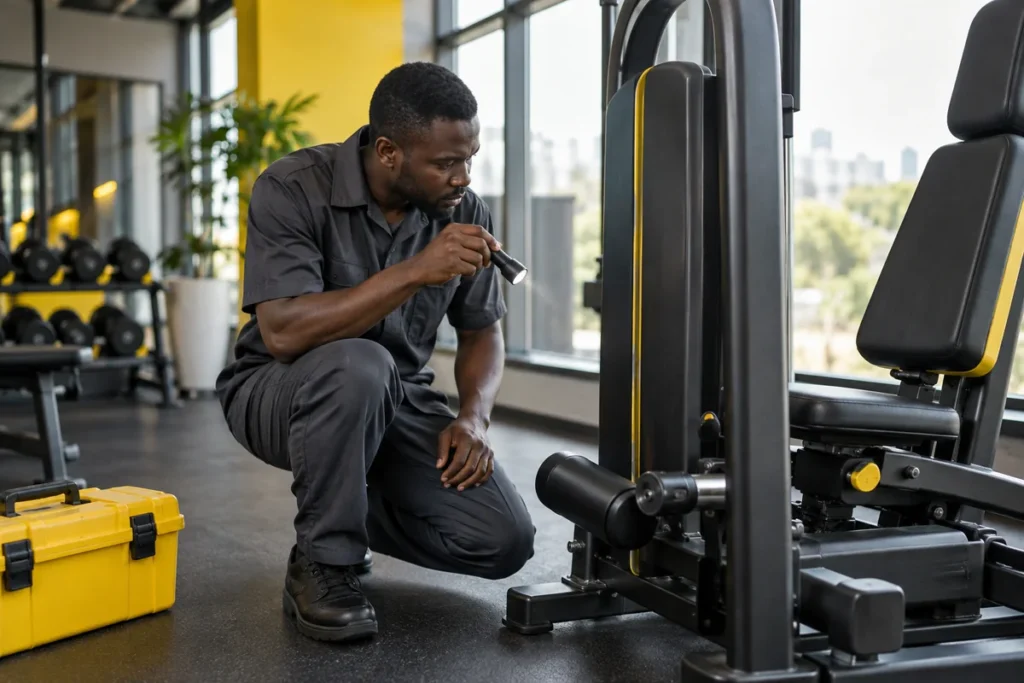
Featured image: AI-generated inspection illustration; not an actual technician, service visit or customer project.
Used gym equipment can be worth considering when its identity, condition, support and total ownership cost can be established. A low asking price is not enough. Before paying, verify what the machine is, whether it is complete, what work it needs and how it will reach its new location.
Treat the inspection as a buying decision, not an opportunity to improvise repairs. Powered equipment, damaged structures and unfamiliar mechanisms may require a competent technician’s assessment before purchase.
Establish the identity before discussing value
Request the exact make, model, serial number where present and photographs of the equipment as it is now. Ask for the purchase record, manual and any service history. A generic catalogue photograph cannot establish the condition of the item being sold.
Compare the identification information with the physical machine and its documentation. If the seller cannot identify it, obtaining the right parts or instructions later may be difficult. Do not assume a similar-looking current model uses the same components.
Ask whether the equipment has been modified, repaired or had major parts replaced. Record the answer. A repaint or new upholstery may improve appearance without resolving structural or mechanical concerns.
Check safety notices and support availability
Search the manufacturer’s support information for the exact model and relevant safety notices. Where a product was sold in the United States, the CPSC recall database can be an additional reference. One database cannot provide complete assurance, so confirm with the manufacturer or appropriate supplier when information is unclear.
Ask whether replacement parts and competent service are available for your location. Obtain a realistic process for ordering parts rather than relying on “it is a popular brand”. A discontinued console, selector mechanism or adjustment component can change the economics of the purchase.
Check whether any warranty transfers to a new owner and what evidence is required. Do not count an original warranty as a benefit until transferability and remaining coverage have been confirmed.
Inspect condition systematically
Begin with an unpowered visual inspection appropriate to the equipment. Look for missing components, obvious damage, signs of unauthorised modification and inconsistencies with the manual. Do not remove guards or open electrical enclosures as part of a casual viewing.
On a bench or rack, pay attention to the structure, joints, adjustment points and required retainers. On a cable machine, visible cable or attachment damage needs competent assessment. On cardio equipment, consider the controls, moving components and reported fault history through an appropriate service inspection.
Avoid turning this into a checklist that claims a machine is safe because no defect was obvious. Some faults require specialist inspection, and a short demonstration cannot establish remaining service life.
| Evidence | What it contributes |
|---|---|
| Model and serial identification | Correct manuals, parts enquiries and safety-notice checks |
| Service records | Known work and recurring issues, where documented |
| Current photographs | Visible condition and completeness |
| Competent inspection | Assessment of concerns beyond an ordinary buyer’s expertise |
| Written included-items list | Clear agreement about accessories and missing parts |
| Transport plan | Realistic cost and feasibility of moving the equipment |
A demonstration is useful, but it has limits
If a demonstration is appropriate, it should follow the manufacturer’s instructions and be conducted with the seller or competent person responsible. Do not test to the maximum advertised load or continue using equipment that behaves unexpectedly.
Observe ordinary adjustments and functions that the person demonstrating can safely explain. Record any abnormal behaviour for assessment. A machine running briefly without a user does not necessarily establish performance under intended use, but that is a reason for a competent inspection—not an invitation to conduct risky testing yourself.
For an adjustable dumbbell, an incomplete locking arrangement is a serious purchasing concern. For a rack, missing safety components may be more than a small accessory cost. Establish the correct replacement and its availability before treating the equipment as complete.
Price the purchase as a project
Add transport, handling, disassembly and reassembly where permitted, inspection, known repairs, missing accessories and installation. Include any site work required at the destination. Compare that total with a suitable alternative, not just the original asking price. Use the quotation comparison framework to separate purchase price from transport, setup and support. Record the asset in a maintenance log if you proceed. For free weights, compare the complete dumbbell arrangement rather than the advertised set total alone.
Use a simple decision sheet:
- Purchase price, confirmed in writing.
- Inspection cost and findings.
- Required repairs and parts, with a quotation where possible.
- Missing accessories and documentation.
- Transport, handling and installation.
- Outstanding uncertainties that remain unpriced.
Do not assign an optimistic number to an unknown repair merely to make the total attractive. Mark it unresolved and decide whether you are willing to proceed without a reliable figure.
An illustrative example: a machine offered at ₦700,000 with confirmed transport of ₦120,000 and quoted repairs of ₦180,000 has a known initial cost of ₦1,000,000 before any other requirements. These invented figures explain the calculation; they are not market prices or a Plus Fitness offer.
Check the destination before paying
Measure the delivery route and final room. A used machine may have been assembled before the current doorway or room arrangement existed. Ask whether it can be moved in its present form and whether the manufacturer permits disassembly.
Plan competent handling and agree who is responsible for damage or missing parts during the move. Keep fasteners and accessories identified with their equipment. Do not rely on a promise that “two people can carry it” without a proper plan.
Check the installation environment and electrical requirements where relevant. A machine that worked at the seller’s property may not suit your proposed supply, room or use class. Those conditions should be assessed before it arrives.
Know when the uncertainty outweighs the saving
Pause the purchase if identity cannot be established, a critical part is missing, a safety notice remains unresolved or the seller will not allow an appropriate inspection. Also pause if the final location cannot accommodate the equipment or if necessary repairs cannot be specified reliably.
This does not mean every cosmetic mark is a reason to reject a used item. Separate appearance from function and safety. Worn upholstery, surface marks and a damaged locking mechanism are different findings and should not be bundled together as “normal wear”.
For maintenance planning, HSE’s inspection guidance is a useful general reference for checks informed by equipment and conditions. The actual inspection scope must suit the machine and the competence of the person carrying it out.
Record the decision and the handover
Keep the seller’s description, agreed included items, inspection findings and payment documents. Photograph the condition at handover where appropriate. Start a new ownership record with the model, serial number, manuals and any work required before use.
If comparing used and new options, browse Plus Fitness gym equipment and request a current quotation for a suitable alternative. Contact the team to ask what inspection or support can be offered for the specific equipment; do not assume support, parts availability or warranty coverage until confirmed.
Prepared with AI assistance. Sources and product links checked on 18 September 2026.
Leave a Reply