
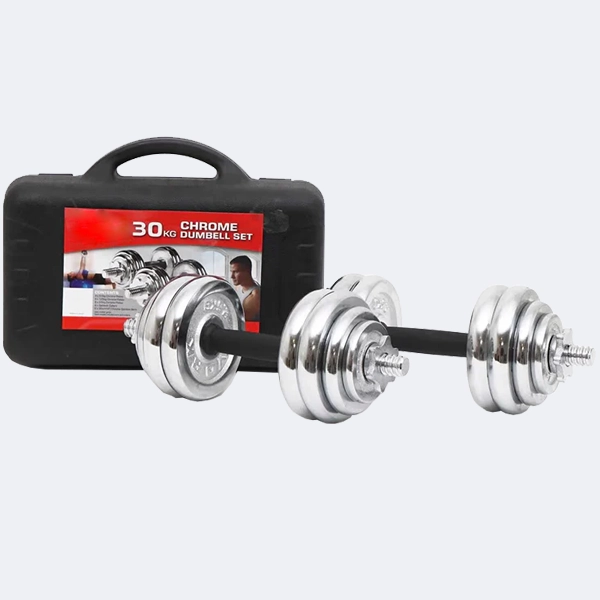
Adjustable dumbbell care begins with identifying the adjustment system. A selector mechanism, a spinlock handle and another plate-loaded design do not share one universal inspection or repair method. Follow the exact manual, keep the loading arrangement complete and stop using a dumbbell whose locking system is unreliable.
Saving floor space is one of the main attractions of adjustable dumbbells. Protecting the mechanism is what keeps that convenience useful.
Know what holds the load in place
On a selector design, a mechanism engages the chosen plates when the handle is lifted from its base. On a spinlock design, compatible plates are retained by the correct collars on the threaded handles. Other systems use different arrangements.
Inspect the parts identified in the manual before use. Check that the product is complete and that adjustments operate as instructed. Do not rely on a familiar-looking click or a quick shake if the manufacturer specifies a particular test.
The BowFlex 1090 manual, for example, includes product-specific checks and warns against dropping the dumbbells or forcing its adjustment control outside the base. These instructions illustrate why a selector system needs its own care routine; they do not describe every adjustable product.
Return the dumbbell carefully
Place the equipment in its intended base or storage arrangement as directed. Avoid dropping it into position or allowing plates to strike each other unnecessarily. Check that nothing is obstructing the base before making an adjustment.
For a plate-loaded set, use matched components and the correct retention system. An apparently similar collar from another product may not be compatible. Missing parts should be replaced through the supplier rather than improvised.
The existing adjustable-versus-fixed guide helps if this ownership routine is a poor match for the way your household or gym handles equipment.
Keep cleaning simple and appropriate
Use the cleaning method approved for the finish and mechanism. Avoid soaking the equipment or spraying liquid into moving parts. Store it in a suitable dry area and keep the base clear of grit and loose objects.
Do not lubricate a selector mechanism simply because it feels stiff. The cause and permitted treatment need to be established from the manual or support team. A repair that makes the control easier to turn could still leave the retention system unsafe.
Respond to a fault with useful information
| Record | Example of a useful description |
|---|---|
| Product identity | Model and serial or batch information where available |
| Affected setting | The specific weight selection involved |
| Observed behaviour | Adjustment will not complete, a part is damaged or a plate is not retained |
| Recent event | A fall, impact, move or other relevant occurrence |
| Supporting evidence | Clear photographs taken without recreating an unsafe situation |
Remove the affected equipment from use and contact the supplier. The repair-or-replace guide explains how to assess the resulting proposal. Keep purchase and warranty information together using the warranty checklist.
Purchase with replacement support in mind
Ask which parts can be supplied and whether the exact model has a manufacturer service or recall notice that needs checking. A very low price becomes less attractive if a small damaged component makes the whole set unusable.
For the Plus Fitness chrome adjustable set, confirm the supplied components and retention system. The next useful weight should come from an approved setting or compatible component, not an improvised modification to the mechanism.
Pingback: Adjustable or Fixed Dumbbells? A Home Gym Buying Guide