
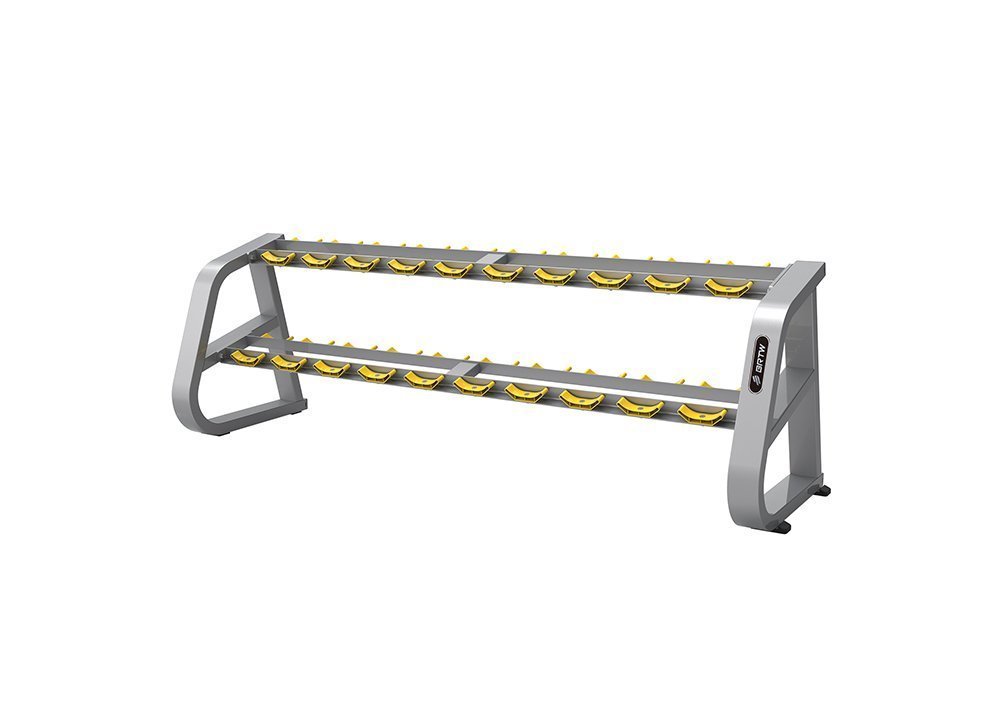
Gym storage racks must fit the shape and quantity of the equipment as well as its total weight. A rack can be within its stated load capacity and still be too narrow, too awkward or incompatible with the dumbbells you own. Plan storage around actual items and the space needed to handle them.
Good storage is part of the training layout. It should make equipment easy to find and return without sending people across another user's working area.
Start with an inventory
Count individual items, not just sets. Record the dimensions of the largest dumbbells, the number and thickness of plates, bar lengths and the accessories that need separate places. Note which items are used most often and which may be added soon.
A set described as ten pairs means twenty individual dumbbells. That distinction matters when estimating shelf length and access. The dumbbell-increment guide helps decide which pairs belong in the collection before you buy storage for them.
Check usable dimensions and compatibility
Ask for usable shelf length and depth, spacing, cradle dimensions where fitted, overall footprint and load limits. Establish whether limits apply to the whole rack or individual shelves or positions.
REP's rack specification provides separate dimensional and capacity information and cautions that compatibility with other manufacturers' dumbbells is not guaranteed. That is a useful reminder that a load rating alone does not establish a physical fit.
Measure your actual equipment, including handles and head shapes. Check that users can grip and remove an item without trapping their hands between neighbouring pieces.
Draw the handling area
The rack's footprint is only the storage rectangle. People need space to approach, lift or return equipment and move away. Do not position a rack so that normal use blocks a doorway or crosses a machine's operating clearance.
| Storage type | Additional checks |
|---|---|
| Dumbbell rack | Head shape, handle access and useful shelf spacing |
| Plate tree or rack | Bore compatibility, peg length and loading access |
| Bar storage | Bar dimensions, stability and retrieval space |
| Attachment storage | Weight, connector shape and secure retention |
| Ball or mat storage | Actual size, drying needs and prevention of obstruction |
Follow the manufacturer's loading arrangement and installation instructions. Do not improvise a heavy-item layout on a rack that was designed for a different product range.
Make returning equipment easy
Use clear labels or a simple layout where they help people identify the right place. A shared gym benefits when the normal route naturally passes the appropriate storage rather than requiring a detour.
Give cable attachments their own planned positions. A handle left on the floor may be a sign that the storage arrangement is inconvenient or unclear, not simply that users need another reminder.
Include storage in the gym setup brief from the beginning. It is much easier to allocate handling space before the room fills with machines.
Leave an intentional expansion margin
Buy room for likely additions where practical, but avoid a large empty rack that consumes space needed for current activity. The gym-expansion guide can help identify which future equipment is supported by real demand.
Plus Fitness lists dumbbell racks. Send the item count, dimensions and photographs of your existing weights when requesting a match. The right rack makes the equipment usable and the room orderly; it does more than hold a stated number of kilograms.
Pingback: Gym Setup Brief in Nigeria: A Practical Planning Guide