
The next piece of gym equipment should address an observed gap in the service you want to provide. Before expanding, record what users wait for, which activities the current setup cannot support and whether layout, scheduling or maintenance could solve the problem first.
A new machine is easy to notice. A better equipment decision is the one that makes ordinary sessions work better after the excitement of delivery has passed.
Observe the busy periods
Choose representative sessions and record equipment use without collecting unnecessary personal details. Note which stations are occupied, where queues form and whether users abandon or change an activity because equipment is unavailable.
Repeat the observation rather than relying on one unusually busy evening. Staff impressions are useful, but a short written record helps distinguish a persistent pattern from a memorable incident.
If users request equipment, ask what they want to do with it. Several different product requests may describe the same underlying need, while one fashionable machine may serve only a narrow group.
Identify the actual constraint
A queue can result from too few stations, slow adjustment, missing attachments, an inconvenient layout or a machine that is frequently unavailable. Each cause suggests a different response.
An illustrative gym might have two cable outlets but only one suitable handle for a commonly used movement. Buying another complete machine would address that problem very differently from supplying an approved additional attachment. In another gym, the limiting factor may genuinely be independent training capacity.
Use the multi-station capacity guide to establish what can be used simultaneously. Do not count exercise labels as independent user places.
Compare practical options
| Observed problem | Options to investigate |
|---|---|
| Repeated queue for one activity | Additional suitable station or revised programme arrangement |
| Frequent equipment downtime | Diagnosis, parts support and maintenance improvement |
| Missing or shared accessories | Compatible additional attachments and organised storage |
| Crowded working area | Layout changes or removal of underused equipment |
| Genuine activity gap | A machine or tool that adds the required capability |
Maintenance remains part of capacity. HSE's maintenance guidance explains the role of planned care in reliability; use it as an operational principle alongside the actual manufacturers' instructions, not as a Nigerian legal requirement.
Price the installed addition
Include delivery, assembly, floor or electrical work where needed, accessories, storage and support. Also consider the space the purchase removes from other activities. A machine that solves one queue can create a circulation problem if placed in the only free corner.
The existing shared-facility planning guide helps reconnect the purchase with the users and operating model. For flooring changes, use the quantity worksheet after selecting the appropriate system.
Set a reason to review the decision
Before buying, write down the problem the addition should solve and how you will assess it. This might be fewer waits for a particular station or access to a newly planned coached activity. Avoid inventing a revenue forecast when you have no reliable evidence for one.
After installation, observe use and collect practical feedback. A purchase may need better orientation or a layout adjustment before its value becomes clear. If the original assumption was wrong, record that lesson before the next expansion.
Build a phased shortlist
Separate the next necessary purchase from attractive later additions. Include storage in each phase so new equipment does not gradually occupy circulation space.
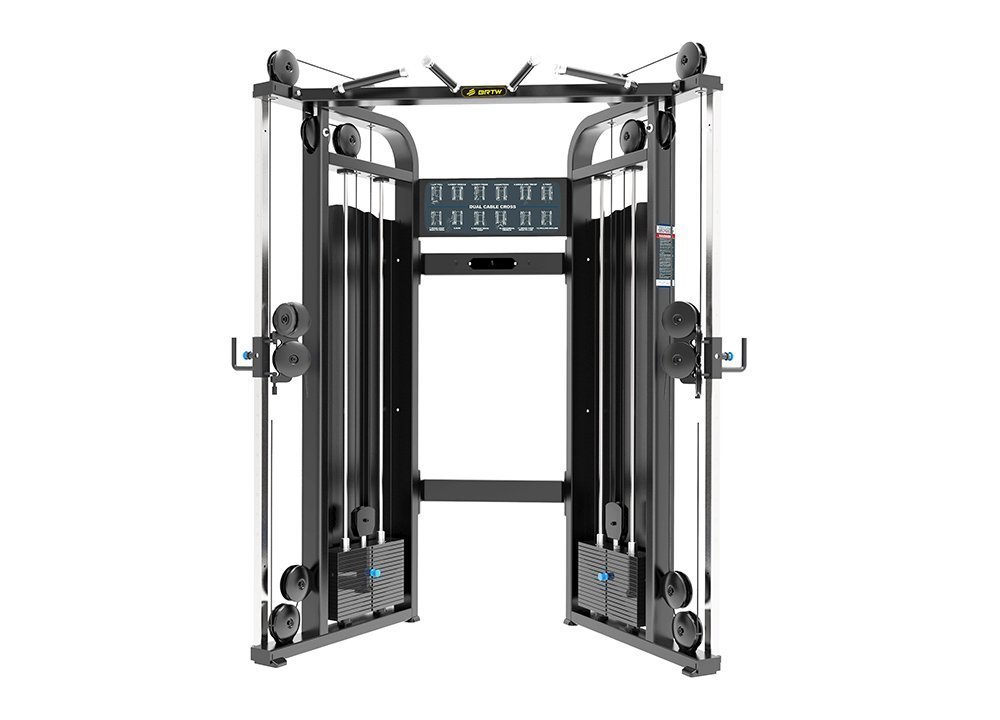
If a functional trainer is on your shortlist, send Plus Fitness the observed demand, room plan and current equipment list. A useful proposal should explain which documented need the machine meets and what changes are required to make it work in your facility.
Pingback: Gym Storage Racks Capacity Fit and Layout