
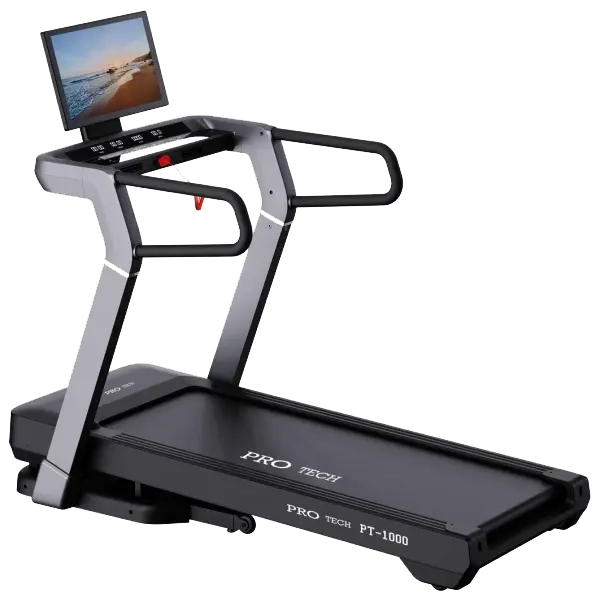
For a tall runner, treadmill belt size should be assessed through the usable running surface and a fitting session at the intended pace. The machine's overall length does not tell you how much space is available for your stride. Height is a useful starting detail, but it cannot determine the right belt by itself.
Two people of the same height may run differently. A treadmill that feels comfortable during a slow showroom walk can feel restrictive when the pace changes.
Ask for the right dimensions
Request usable belt length and width, overall machine dimensions and the manufacturer's operating clearances as separate figures. The side rails and motor cover occupy space without increasing the area where your feet land.
The Life Fitness Aspire specifications, for example, distinguish running-surface information from overall equipment size. This is the type of information to request for your shortlisted model; it is not a universal size recommendation.
Also ask about the step-up height and any increase in user height when incline is used. Ceiling height, overhead fittings and the user's position all belong in the room assessment.
Plan a useful fitting session
Wear the shoes you normally use for running. Start as instructed and increase pace gradually within the demonstration arrangements. Check whether you can adopt your usual movement without deliberately shortening your stride or crowding the front of the machine.
Notice where the controls sit. Can you reach them comfortably without changing your position excessively? Do the handrails interfere with your normal arm movement? Can you see the display without repeatedly looking down? These are practical fit questions that a belt measurement alone cannot answer.
Do not deliberately run near the belt's edges to test its limits. The purpose is to establish comfortable ordinary use, following the supplier's instructions, not to stress-test the equipment.
Include every regular user
If one person walks and another runs, test the configuration for both. Compare the needs of the largest or longest-striding user without forgetting access and control reach for the others. A larger machine may provide more usable room while making entry, storage or delivery harder.
The walking-pad comparison helps distinguish compact walking equipment from running machines. The weight-capacity article covers another independent check: a generous deck does not override the product's user limit or intended-use conditions.
Check the space around the treadmill
A comfortable deck still needs an appropriate installation. Measure the room with furniture and door swings included. Use the exact manufacturer's clearance requirements, especially the designated clear area around and behind the machine. Do not replace them with a single generic gap found online.
Then follow the delivery and installation checklist. A large treadmill may fit the final room but be difficult to move around a staircase turn. Shipping dimensions, assembly method and handling requirements should be agreed before payment.
Record the decision while it is fresh
After a demonstration, write down the exact model, belt dimensions, pace tested and anything that felt restrictive. A second machine is easier to compare when you have observations instead of a vague memory that the first one felt bigger.
Ask Plus Fitness for the usable deck dimensions and demonstration options for the shortlisted treadmill. The strongest purchase decision combines documented dimensions with comfortable use at your intended pace. A label such as “commercial”, “wide” or “professional” should never have to do the work of that evidence.
Leave a Reply