
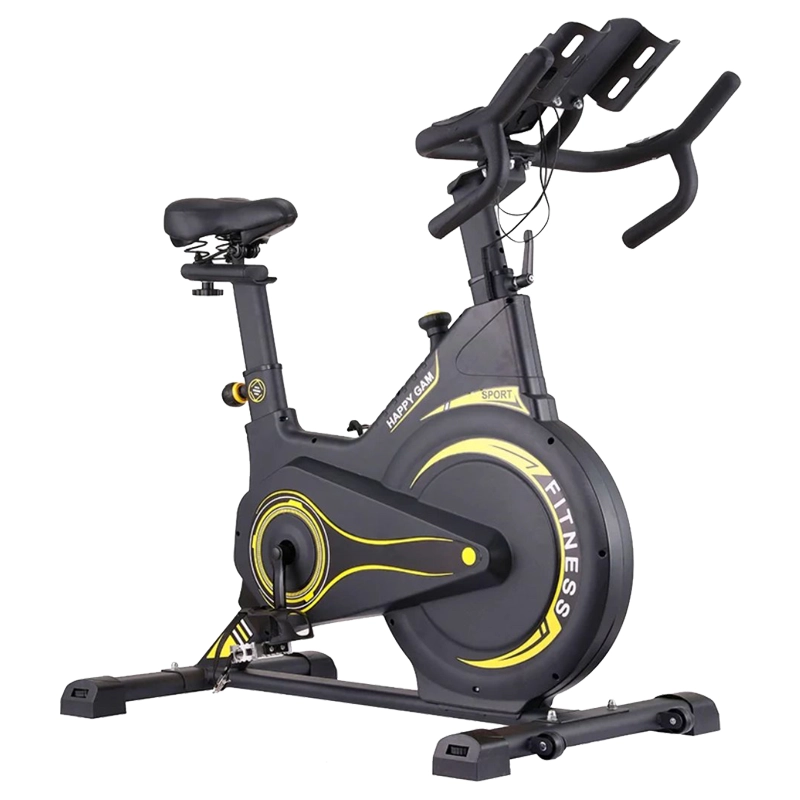
An upright exercise bike places the user over the pedals in a more conventional cycling arrangement. A recumbent design places the pedals farther forward and generally provides a seat with back support. Choose between them by trying access, adjustment and comfortable pedalling; neither category is automatically right for everyone.
The seat that looks most comfortable in a catalogue is not necessarily the seat that places your feet, knees and hands comfortably during a session.
Begin with getting on and off
Look at the route to the seat. Note any frame member that must be stepped over, the position of supports and the space needed beside the bike. A step-through design can simplify access, but the actual geometry still matters.
The Life Fitness Aspire recumbent model illustrates a design with a backrest and step-through access. Those are product features to examine, not evidence that all recumbent bikes provide the same fit or that the design treats a medical condition.
For anyone whose pain, balance or mobility affects equipment choice, involve the appropriate clinician or exercise professional in the selection. A retailer can explain adjustments; it cannot diagnose which movement will relieve symptoms.
Check adjustment at both ends of the range
If the bike will be shared, test the shortest and tallest regular users. Ask how the seat moves and how the adjustment locks. A setting should be repeatable without guessing where the previous user left it.
Try the pedals with your normal training footwear. Check strap adjustment, foot support and whether you can reach the controls from a comfortable position. Being within a published height range is a useful screening check, not a substitute for experiencing the actual machine.
An illustrative household might include one person who prefers an upright cycling posture and another who values a supported seat. Buying the larger-looking seat without trying both users could still leave one person reaching awkwardly for the pedals.
Compare the space honestly
| Question | Why it matters |
|---|---|
| How long is the operating setup? | Recumbent and upright layouts occupy space differently |
| Can users approach the seat easily? | Access can be blocked even when the footprint fits |
| Can the seat be adjusted in place? | Walls and furniture may interfere |
| Is there room to clean and service it? | A tight installation can make routine ownership difficult |
Use the existing exercise-bike guide for the broader purchase checklist. Keep the manufacturer's working clearances on the layout rather than drawing only the frame.
Do not confuse posture with resistance
Upright and recumbent describe the arrangement of the user. They do not fully describe the braking system, drive or electrical needs. Two bikes with similar seats can differ substantially in their controls and maintenance requirements.
Our magnetic and friction resistance comparison separates those features. Test the resistance range at the settings you expect to use and find out whether the console requires mains power, batteries or another arrangement.
Make the decision from the demonstration
Record which model you tried, the settings used and any difficulty with access or controls. If another household member will use it regularly, their trial belongs in the decision too.
Browse the Plus Fitness exercise-bike catalogue example and ask which current options match your access and fit requirements, including recumbent models if relevant. A good shortlist starts with the people using the bike and ends with documented specifications for the exact product.
Leave a Reply