
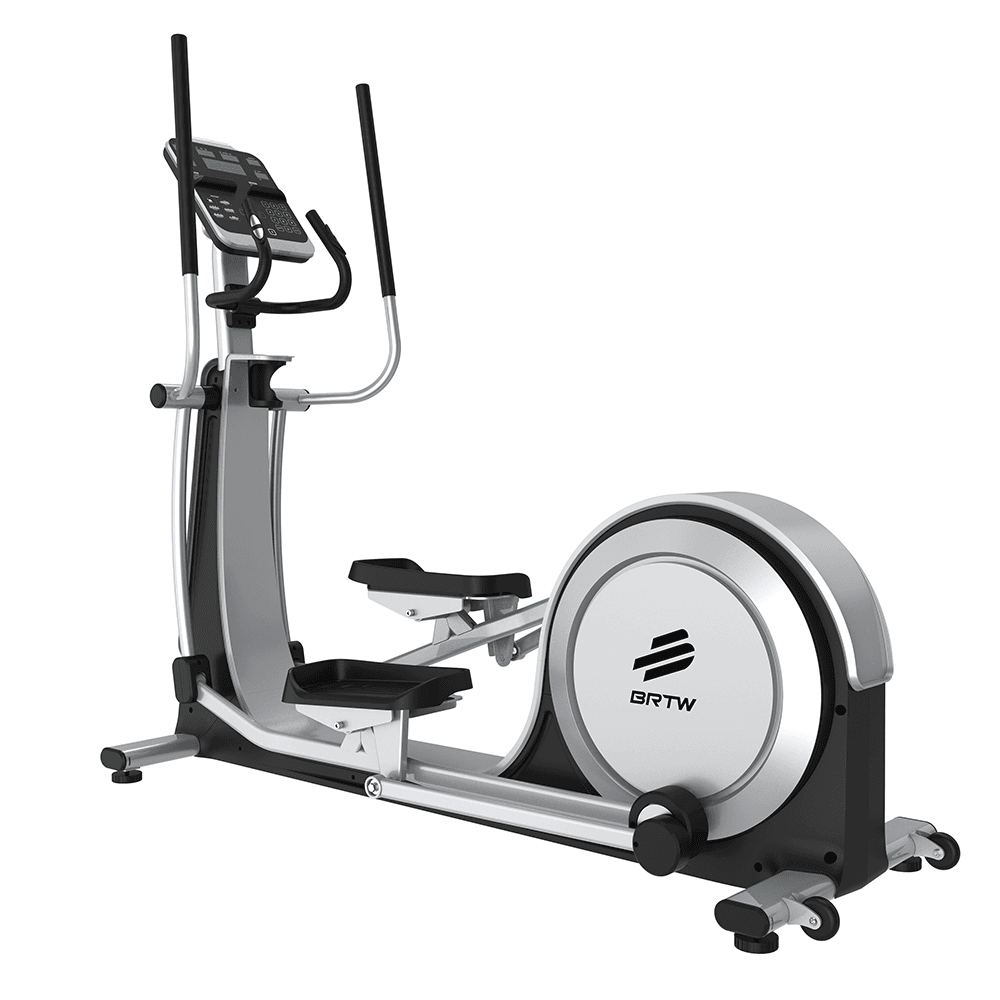
Elliptical stride length is one part of equipment fit. Pedal spacing, handle reach, step-up height and the movement path also affect whether a cross-trainer feels comfortable. A height chart can help create a shortlist, but a demonstration is more informative than choosing the longest advertised stride.
An elliptical guides your feet through its own path. You are checking whether that path works comfortably for you, rather than whether you can force yourself to follow it.
Start with the movement rather than the number
Try the machine at an easy pace and assess how naturally your feet travel. Notice whether the movement feels cramped or stretches you beyond a comfortable pattern. Try the handholds you would actually use and check whether reaching for them changes your posture awkwardly.
Do not interpret “long stride” as a premium feature that everyone needs. Some machines have a fixed stride, while others offer adjustment or a changing path. Understand what the quoted dimension describes on the exact model.
The Life Fitness E1 specification lists stride length and step-up height separately. This is a useful distinction when requesting product information; those figures are not a sizing recommendation for another cross-trainer.
Check height throughout the motion
Ceiling clearance involves more than the machine's stationary frame. Consider the user's height on the pedals, the highest relevant point in the movement and the manufacturer's requirements. Include ceiling fans, lights and sloping sections of the roof.
A room can appear tall enough when you stand beside the machine yet become unsuitable when you step onto it. Do not resolve a tight fit by assuming the user will always avoid a particular setting.
Draw the full working area in your gym setup brief. Moving handles and access routes need space too.
Share the fitting session
For a household or hotel, consider the range of people expected to use the machine. If adjustments are available, establish how easily they can be changed and locked. Instructions should make the process clear to the people using the room.
| Fit check | What to observe |
|---|---|
| Pedal movement | Comfortable path without forced reaching or crowding |
| Pedal spacing | A stance that feels appropriate for the user |
| Handles | Reach and clearance through the movement |
| Getting on and off | Suitable handholds, access and step height |
| Room | Operating envelope and overhead clearance |
If persistent discomfort occurs, stop and seek appropriate advice. “Low impact” is not a promise that a particular machine will suit every joint condition or every user.
Separate fit from features
A large screen cannot correct an unsuitable movement path. Likewise, a good fit does not answer questions about resistance, power supply, permitted use or maintenance. Assess those after the machine passes the practical fitting checks.
If you are choosing between an elliptical and a seated machine, the upright and recumbent bike article offers a different access-and-fit comparison. For an upstairs room, consider noise and vibration before finalising the equipment position.
Make the showroom visit useful
Bring room dimensions and the heights of the regular users. Record the exact model you tried, including any adjustment settings. Ask for the manual, working dimensions and warranty terms for the supplied version.
Plus Fitness lists an elliptical trainer. Request its stride, pedal, access and power details rather than inferring them from its appearance. The machine should fit your movement and your room; you should not have to redesign your normal stride around an attractive specification sheet.
Leave a Reply