
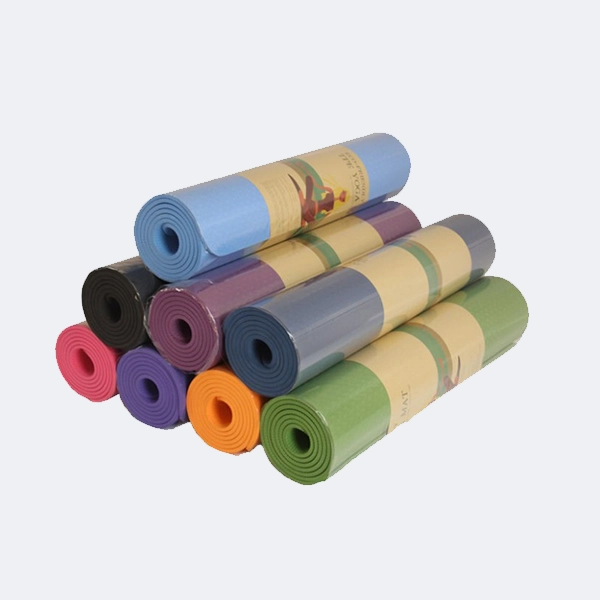
Choose a yoga mat or exercise mat by the activity, grip, firmness and cushioning you need. Thickness matters, but it does not tell you everything. A thick, soft mat can feel pleasant for some floor exercises while providing an unsuitable surface for a different movement or piece of equipment.
The useful test is what happens when the mat is doing its job, not how luxurious it feels when squeezed in the shop.
Describe the activity clearly
For yoga, consider the poses, transitions and conditions of the class. For general floor exercise, consider contact points, movement and whether the surface stays in place. A mat intended to make kneeling more comfortable has a different job from a permanent gym floor supporting heavy equipment.
Manduka's mat-selection guidance distinguishes grip, materials and cushioning across its ranges. It illustrates why even within one manufacturer's products, thickness is only one selection factor.
If the mat is needed because of persistent pain or a specific condition, seek appropriate professional guidance about the activity and setup. Extra padding alone does not establish that an exercise is suitable.
Try grip and stability together
Check how the underside behaves on the floor where it will be used. A mat that grips well on one showroom surface may move on a different finish at home. Follow the manufacturer's instructions about suitable surfaces and preparation.
Assess the top surface under realistic conditions. If your hands become sweaty during the activity, ask about the material's intended use and whether a specific towel or care routine is recommended. Avoid assuming a particular texture always provides better grip.
The mat should lie as intended without creating curled edges in the working area. Check the usable length and width with your movements in mind rather than choosing from colour alone.
Think about the journey to class
For a mat that travels, compare actual weight, rolled size and carrying arrangement. A mat that stays in a home exercise corner may be selected differently. Drying time and storage can also matter when the mat must be packed away soon after use.
An illustrative buyer attending classes by public transport may prefer a manageable carrying size, while someone exercising only at home may place more value on another feature. The right trade-off comes from the routine, not a universal premium category.
Keep cleaning within the material instructions
Ask how the mat should be cleaned, dried and stored. A cleaner suitable for one material may damage another. Avoid soaking or prolonged sun exposure unless expressly permitted, and do not roll the mat away damp if the instructions require it to dry first.
For shared mats, establish who cleans them and how they are stored between users. Clear ownership of this small task helps prevent a rack of damp, neglected equipment.
Do not use a mat to solve a flooring problem
A yoga mat is not evidence that a room can support dropped weights or a heavy machine. Start with the existing gym-flooring guide when the question concerns equipment support, impact or a permanent surface.
If you are adding an exercise ball or ab roller, confirm the surface requirements of the equipment as well as the mat. The two products need to work together for the intended activity.
Plus Fitness lists yoga mats. Tell the team the activity, the floor surface and whether the mat will travel. Ask for dimensions, material and care instructions, then choose the combination of grip, firmness and cushioning that suits how you will actually use it.
Pingback: Jump Rope Length Surface and Space Checks